


What Is a Rope Access Technician?
A rope access technician is a highly trained, certified professional who performs essential maintenance, rigorous inspections, and complex repairs in hard-to-reach areas using specialized rope techniques. These experts provide a vital lifeline to modern industries where traditional access is impossible or impractical, making them indispensable in sectors like oil and gas, heavy construction, wind energy, and large-scale infrastructure maintenance.

Definition and Role
At its core, rope access technicians utilize advanced industrial climbing and suspension techniques to access elevated, high-rise, or confined spaces safely. By using a combination of ropes, harnesses, and specialized breaking systems, they completely eliminate the need for traditional scaffolding, cradles, or heavy aerial machinery.
Their day-to-day work is highly versatile and depends on their specific technical backgrounds. Common on-site responsibilities include:
NDT (Non-Destructive Testing): Assessing structural integrity without causing damage.
Industrial Welding & Fabrications: Carrying out structural repairs at extreme heights.
Blasting and Painting: Applying protective coatings to prevent corrosion.
Structural Inspections: Providing detailed visual and photographic reports of high-rise assets.
Industries That Use Rope Access
The flexibility of rope access makes it the preferred choice across a wide range of demanding sectors:
Oil & Gas: Conducting inspections on offshore drilling platforms and flare stacks.
Wind Energy: Performing blade repairs and structural maintenance on wind turbines.
Construction & Infrastructure: Installing facades, cleaning windows, and repairing bridges.
Maritime & Offshore: Servicing shipyards, vessel hulls, and marine structures.
Why Choose Rope Access?
Rope access is preferred for its safety, efficiency, and cost savings.
Safety and Compliance
Safety is the foundation of the industry. Certified technicians strictly adhere to international IRATA (Industrial Rope Access Trade Association) standards. Every movement is calculated, and fail-safes are integrated into every task to ensure an unmatched safety record.
Cost-Effective Solutions
Deploying massive scaffolding structures or renting heavy cranes incurs high labor and logistics costs. Rope access bypasses these expenses entirely, reducing overall project costs by up to 70% compared to traditional methods.
Minimal Downtime
Setting up complex scaffolding can take days or weeks. In contrast, rope access systems can be installed and dismantled within hours. This rapid deployment ensures faster execution and minimal disruption to daily industrial operations.
VIVABLAST’s Rope Access Services
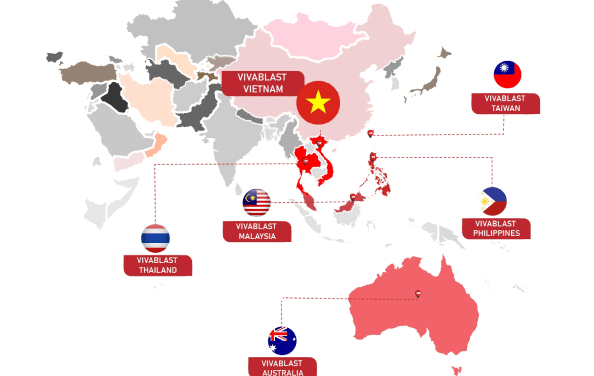
As a premier industrial service provider, VIVABLAST delivers top-tier, IRATA-certified rope access solutions tailored for diverse industrial projects across Vietnam.

Certified Technicians
Our workforce comprises highly skilled professionals holding IRATA Level 1, 2, and 3 certifications. From executing basic maneuvers to supervising complex rescues and managing high-risk environments, our team ensures absolute competence on-site.
Applications in Vietnam
We actively support Vietnam’s booming industrial landscape. Our teams are deployed at major oil refineries, remote onshore and offshore wind farms, and iconic high-rise buildings in urban centers, offering localized expertise with international standards.
Equipment and Techniques
We never compromise on quality. VIVABLAST utilizes state-of-the-art, certified gear and implements rigorous risk assessments before any project begins, maintaining a flawless safety culture.
Benefits of Hiring VIVABLAST’s Rope Access Technicians
- Expertise and Experience: Years of experience in high-risk environments.
- Customized Solutions: Tailored to your project’s needs.
- Fast Turnaround: Efficient execution with minimal delays.
Frequently Asked Questions (FAQs)
Q: What certifications do your technicians hold?
A: Our technicians are IRATA-certified and trained in safety protocols.
Q: How do you ensure safety during rope access?
A: We follow IRATA guidelines, use double-rope systems, and conduct pre-task risk assessments.
Q: What industries benefit most from rope access?
A: The oil & gas, wind energy, commercial construction, and maritime industries benefit the most due to the height and complexity of their infrastructure.
Contact VIVABLAST for Rope Access Services
For safe, efficient, and cost-effective rope access solutions that protect your assets and optimize your budget, contact VIVABLAST today!